Source Thermal Break Wrought Iron Door for Homes, Hotels, and Villas
Compare 30 thermal break wrought iron door options featuring tempered glass, custom sizes, and security ratings. These entry doors offer sound insulation and durable steel construction for residential and commercial exterior applications; compare the available evidence and request quotations based on your requirements.
Key considerations
Products List


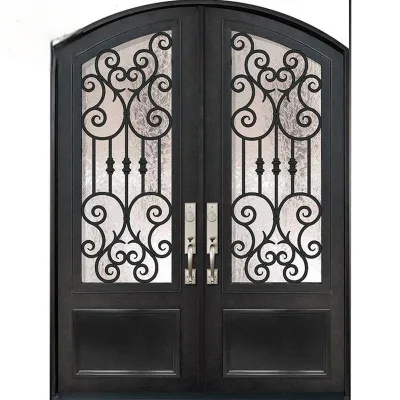


Comprehensive Sourcing Guide
Thermal Break Wrought Iron Door Sourcing Guide
Procuring thermal break wrought iron doors requires balancing aesthetic customization with rigorous performance standards for exterior security. Buyers must verify that the selected unit integrates a thermal break system to prevent heat transfer, a critical feature for energy efficiency in varying climates. The observed market offers models with both thermal and non-thermal break systems, necessitating a clear distinction during the specification phase to ensure the final product meets the intended insulation goals.
The supply chain for these specialized doors often originates from manufacturing hubs in Fujian and Guangdong, China, where suppliers provide extensive customization options. While the core material is steel or wrought iron, the specific configuration of the thermal break and the type of glazing significantly influence the final performance. Buyers should focus on verifying the exact system type and glass configuration, as these elements directly impact the door's ability to withstand hurricane impacts and provide sound insulation.
Product Scope and Observed Listing Signals
The available product range includes entry doors designed for security and decoration, featuring open styles such as swing mechanisms suitable for exterior applications. Listings indicate that suppliers offer customization in design, color, and size, allowing buyers to request specific aesthetics like classic or modern styles. The glass options are diverse, ranging from single and double glazed units to triple glazed configurations, with some models specifically rated for hurricane impact resistance.
Observations of the market reveal that surface finishing is typically a finished process involving power coating, sandblasting, or hot zinc spraying to ensure durability. The product models identified include specific codes like FD-W483 and FD-W220, which serve as reference points for distinct design variations. Buyers should note that while the base material is steel, some listings specify wrought iron, and the presence of veneer wood options like Sabelli suggests a hybrid approach for certain decorative requirements.
Technical Specifications to Verify
Buyers must rigorously verify the material thickness, which is observed in the market as 12 Gauge or 10 Gauge, to ensure structural integrity against forced entry. The glass thickness is a critical variable, with available options spanning from 5mm to 12mm, and the glass type must be confirmed as tempered or double tempered to meet safety and impact standards. Additionally, the hardware selection, whether Chinese or German origin, plays a pivotal role in the operational longevity and security rating of the door assembly.
The thermal performance of the door depends heavily on the system design, specifically the inclusion of a thermal break versus a non-thermal break construction. Buyers should confirm the specific surface treatment applied, such as anti-rust primer or customized surface colors, to guarantee resistance against corrosion in exterior environments. It is also essential to validate the sound insulation capabilities, which are described in listings as either classic or modern style, ensuring the door meets the acoustic requirements of the installation site.
Compliance and Safety Documentation
Documentation for these doors should include evidence of ISO certification, which serves as a baseline indicator of the manufacturer's quality management systems. While specific safety ratings like "A" are mentioned in listings, buyers must request detailed test reports that validate the security rating and the specific performance claims regarding fire resistance, as some models are explicitly categorized as fire doors. The absence of specific third-party certification names in the provided data means buyers must ask for verifiable proof of compliance with local building codes.
Safety verification extends to the structural integrity of the iron jamb and the door frame, which are listed as part of the product standard. Buyers should ensure that the packing method, described as wood crates or wooden safety packing, protects the finished surface during transit to prevent damage that could compromise the door's function. Furthermore, the inclusion of optional mesh and the specific glass types, such as fixed or opening configurations, must be documented to confirm they meet the safety requirements for the intended application.
Cost Drivers and Commercial Terms
The price range observed in the market spans from 44 to 2499 USD, a variance driven by the complexity of customization, the type of glass, and the origin of the hardware components. Buyers should anticipate that higher costs correlate with advanced features like triple glazing, hurricane impact ratings, and specific surface treatments like hot zinc spraying. The minimum order quantity is flexible, with some suppliers accepting even a single set, which allows for smaller procurement volumes but may affect the unit price structure.
Lead times are consistently reported as 30 to 40 days, a factor that must be integrated into the project schedule to avoid delays. Delivery times are often cited as 30 days, but this should be confirmed against the specific production timeline for customized orders. Buyers need to account for the production time required for specialized finishes and the assembly of complex systems, ensuring that the commercial terms clearly define when the product is considered ready for shipment versus when it arrives on-site.
Supplier Qualification and Quality Control
Supplier qualification should prioritize manufacturers located in Fujian or Guangdong who demonstrate a capacity for high-volume customization and adherence to ISO standards. Buyers must verify the supplier's ability to produce specific models like FD-W414 or FD-W531, as these codes indicate established production lines for distinct design requirements. The presence of a "Security Rating A" in listings suggests a baseline quality, but direct engagement with the supplier to discuss their quality control protocols for surface finishing and assembly is essential.
Quality control checks must focus on the consistency of the power coating and the integrity of the thermal break system, which are critical for long-term performance. Buyers should request samples or detailed photos of the finished surface to verify the quality of the sandblasting and anti-rust primer application. Additionally, the verification of the hardware quality, whether sourced from China or Germany, is a key step in ensuring that the door operates smoothly and maintains its security rating over time.
Long-Term Procurement Checks
Long-term procurement success depends on establishing a clear maintenance protocol for the surface treatments and hardware components of the wrought iron doors. Buyers should verify the supplier's warranty terms regarding the durability of the power coating and the resistance of the anti-rust primer against environmental degradation. The customization options, such as any design or color, must be documented with precise specifications to ensure that replacement parts or future orders match the original aesthetic and functional requirements.
Buyers must also plan for the logistical aspects of the product, including the robustness of the wood crate and iron pallet packing to prevent damage during extended storage or shipping. Regular audits of the supplier's production capacity are necessary to ensure they can meet future demand without compromising the 30-40 day lead time. Finally, maintaining a record of the specific model numbers and glass configurations will facilitate easier reordering and ensure consistency in the building's security and energy performance standards.
FAQs
What is a thermal break wrought iron door and how does it improve energy performance?
A thermal break wrought iron door has an insulating barrier between interior and exterior steel sections, reducing heat transfer through the frame. Combined with double or triple tempered glazed panels, it limits condensation and improves interior comfort. Non thermal break versions remain available for mild climates or covered entries where insulation is less critical.
Can I order a thermal break wrought iron door in a custom size and color?
Yes, customization is available for size, design, color, and decoration, so any size and any color can be specified. Buyers can supply pictures or drawings for the design. Lead time is typically 30 to 40 days from production start, and even one set can be ordered as the minimum.
Which glass options are offered with thermal break wrought iron doors?
Glass can be single, double, or triple glazed tempered panels, with hurricane impact options available. Thickness choices include 5mm, 6mm, 8mm, 10mm, and 12mm, and glass color can be green, silver, gray, tea, mirror, blue, or gold tint. Fixed or opening glass types can be selected depending on the entry design.
What surface treatments protect a wrought iron entry door from rust?
Doors receive finished surfaces using treatments such as powder coating, sandblast preparation, hot zinc spraying, and anti-rust primer. This layered approach supports the A security rating for exterior placement. Custom surface colors are available, and packing in wood crates or on iron pallets protects the finish during transit.
How long is the lead time and what is the minimum order quantity?
Production time is normally 30 to 40 days, and some listings quote around 30 days for delivery. The minimum order is flexible, with even one set orderable, so small projects and sample orders are practical. Customization, packing, and hardware selection should be confirmed early to keep the schedule on track.
What hardware choices are available for a thermal break wrought iron door?
Hardware can be supplied from Chinese or German suppliers, letting buyers balance cost and specification preferences. Since these are entry doors for exterior use, hardware is matched to security and decoration functions. Confirm the hardware origin, finish, and lock configuration during ordering so production can begin within the standard lead time.
Can wrought iron doors be made with fire-rated or security functions?
Security and decoration are core functions, and the product line includes fire doors as a special door type, so buyers needing fire performance can request it. Steel construction with tempered glass, an A security rating, and exterior positioning supports protection needs. Specify the required function clearly so the correct system and configuration are quoted.
How are wrought iron doors packed for international shipping?
Packing uses wooden safety packaging, wood crates, or iron pallets to protect frames and glass in transit. Origin locations include Fujian and Guangdong in China. Because panels are heavy and glass is breakable, buyers should confirm crate dimensions and loading arrangement when finalizing the order so delivery arrives intact.